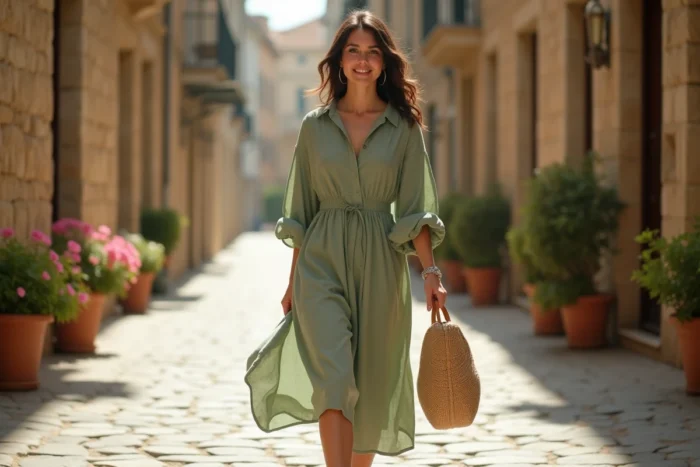
A loose linen dress that hangs off the shoulders, a fabric that floats without a precise direction: we all know that moment when the garment wears the person instead of the other way around. The problem is almost never the dress itself, but the lack of visual anchor points that structure the silhouette. With the right accessorizing and layering techniques, the loose dress becomes a piece that works from the office in the heatwave to a casual evening out.
Loose dress at the office in hot weather: effective combinations
When the thermometer rises, a loose dress made of breathable material (linen, lightweight cotton, viscose) instantly resolves the comfort issue without sacrificing professional appearance. The trap would be to wear it alone with flat sandals: you immediately slip into weekend territory.
To frame the silhouette in a professional context, add a thin belt placed at the natural waist. Not a wide belt that cuts the bust in half, but a discreet model in leather or woven fabric that redraws a visual reference point. This single gesture transforms a shapeless dress into a structured outfit.
For shoes, loafers, derby shoes, or low block-heeled mules provide a visual grounding that flip-flops or sneakers cannot offer. You can also opt for open-toe pumps if the dress code allows. The goal remains the same: to anchor the outfit from the bottom so that the volume on top appears intentional, not accidental.
Knowing how to wear a loose dress with style daily relies on this principle of counterpoints: the volume calls for a fitted element elsewhere in the outfit.
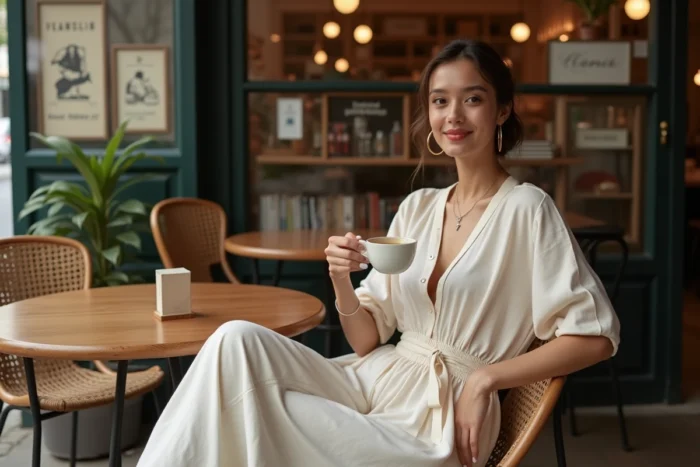
Belt, layering, and accessories: structuring the volume of a fluid dress
The belt is not the only lever. Layering works remarkably well with a loose cut, provided you adhere to a simple rule: the added piece must be more fitted than the dress.
Three combinations that work in practice
- A short, fitted blazer worn open over a loose midi dress. The contrast between the straight fall of the blazer and the movement of the dress creates an immediate balance, suitable for both a client meeting and a dinner.
- A fine knit sleeveless vest, tucked in or not into a belt. This intermediate layer breaks up the front volume and adds dimension to the look without weighing down the silhouette in hot weather.
- A slightly short denim jacket (ending at the waist) paired with a long cotton dress. The rawness of the denim anchors the casual vibe and prevents the dress from slipping into “too dressed.”
Accessories play a role of punctuation. A structured bag compensates for the blur of a fluid dress, where a soft canvas bag would reinforce the impression of total relaxation. Delicate jewelry (short chain, dangling earrings) draws the eye upward and rebalances proportions when the dress falls to the ankles.
Loose dress for the evening: playing with materials rather than tightness
In the evening, we often think that a dress must be fitted to make an impact. A loose dress in a refined fabric tells a completely different story. Satin, silk, lightweight jacquard, or even textured cotton bring the “dressed up” dimension that the cut does not provide.
The material replaces the cut as a signal of elegance. A straight, loose satin dress with a fluid fall, paired with heels and bold earrings, holds its own against a sheath dress.
Colors also play their part. For an evening, dark or saturated shades (midnight blue, burgundy, forest green) are preferred as they add depth to the volume. Light colors work, but they require a strong accessory to avoid the “nightgown” effect that everyone fears with a light loose dress.
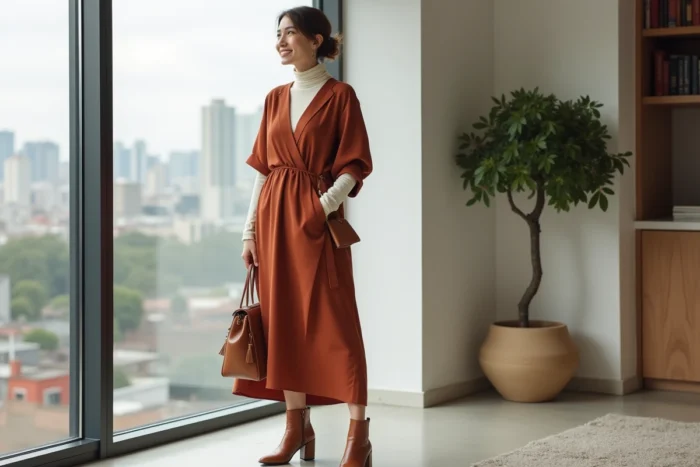
Shoes and loose dress for an evening look
The choice of shoes depends on the length. With a loose midi dress, thin-heeled sandals or pointed pumps elongate the visible leg and contrast with the volume of the fabric. With a long dress, wedges or block-heeled mules work well because the shoe is less visible: it’s the height gained that matters, not the style.
Opinions vary on this point, but wearing white sneakers with a loose dress in the evening only works if the rest of the outfit (jewelry, bag, hairstyle) clearly compensates for the sporty vibe of the shoe.
Colors and prints on a loose dress: what works according to the occasion
A busy print on a large volume of fabric can quickly overwhelm the eye. On a loose dress, small or medium patterns work better than XXL prints, which visually amplify the silhouette.
For everyday wear, vertical stripes on a light background remain a classic that elongates the silhouette effortlessly. Small flowers on a dark background work well in mid-season with a short jacket.
In a more formal context, a solid loose dress is easier to accessorize. You can then afford a printed scarf tied around the neck or a patterned bag without creating visual conflict. The operational rule is straightforward: one printed element per outfit when the dress is loose.
For bright colors (red, yellow, orange), limit accessories to neutral tones (black, beige, off-white). The volume of colored fabric is enough to capture attention. Adding colorful accessories on top is like turning up the volume when the music is already loud.
The loose dress does not need to be tamed. It needs a framework: a belt, a fitted piece, shoes that anchor the look, and a choice of material or color suited to the context. These few guidelines are enough to transition from a floating silhouette to a confident outfit, whatever the occasion.