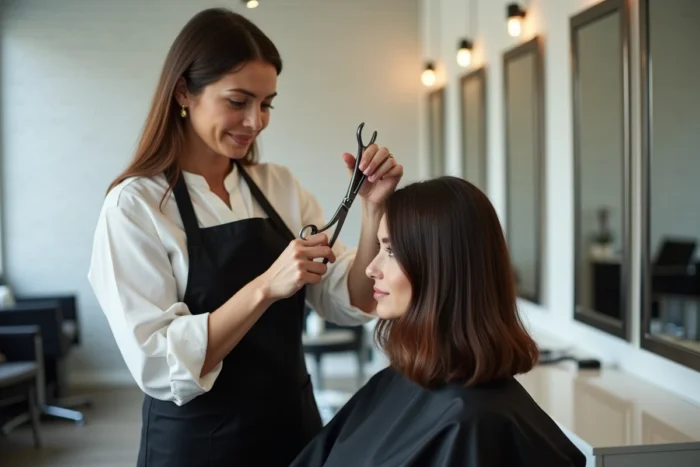
Have you ever spent twenty minutes detangling your lengths before you could even style them? When hair becomes difficult to manage, two techniques often come up in salons: thinning and texturizing. Both approaches aim to lighten the hair, but they do not produce the same result and are not suitable for the same hair types. Understanding how they work can help avoid mistakes that damage the hair fiber in the long run.
Thinning and texturizing: two distinct technical gestures
These two terms are often confused. Thinning involves gradually tapering the strand towards the tip by cutting some hairs shorter than others within the same section. The stylist uses straight scissors in a point-cutting technique or a razor to create movement and soften the cut line.
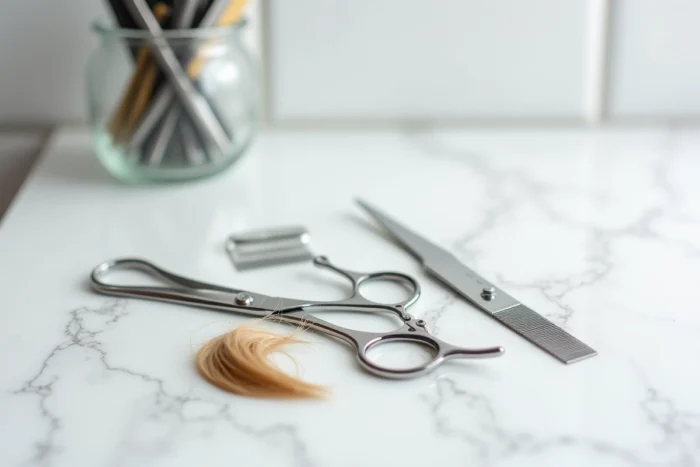
Texturizing, on the other hand, removes bulk from the entire strand using texturizing scissors with serrated blades. These scissors only cut part of the hair caught between the blades, which reduces volume without altering the apparent length. The result is more holistic: it lightens the hair rather than working on the shape of the cut.
Before choosing between these two options, it may be helpful to learn more about thinning or texturizing hair with Zaturelle, which details the cases where each technique applies.
Hair fiber and thinning: why the nature of the hair changes everything
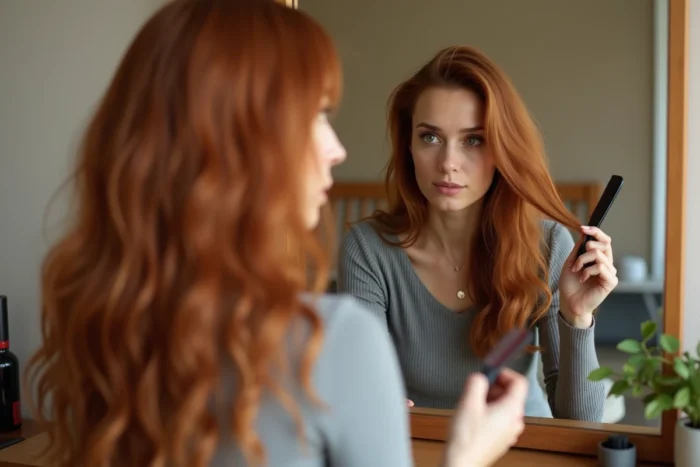
Do you have tight curls or fine hair? The answer to thinning will not be the same as for thick, straight hair. This is the point that online tutorials often gloss over too quickly, while it is the main decision criterion.
A thick, straight, and heavy hair (typically Asian hair) handles thinning well. The technique gives it lightness and movement without weakening the fiber. In contrast, thinning fine or curly hair within the structure of the cut is counterproductive. Thinning accentuates the frizzy effect, creates brittle ends, and gives a burnt appearance to the lengths.
For curly or coily hair, the problem rarely comes from the diameter of the fiber. It is the overall volume, related to the shape of the curl, that gives the impression of bulk. Removing material with texturizing scissors breaks the spring of the curl. The result: uncontrollable frizz a few weeks after the cut.
When thinning remains relevant
On the edges of a cut (bangs, sideburns, nape), thinning as a finishing touch works on almost all hair types. It softens the outline without touching the structure. It’s a matter of area and quantity, not a universal technique.
Long layered cut: the alternative that preserves the fiber
Rather than removing bulk from within the strands, layered cuts play on lengths to redistribute volume. This approach is making a strong comeback in salons, driven by a trend towards long layers that create movement without weakening the hair.
The principle is simple: layers of different lengths allow the hair to fall with more fluidity. The shorter top hairs visually lighten the bulk without thinning the fiber. For thick hair, this technique offers a more durable result than texturizing with scissors, whose effect fades as the hair grows back to the same length.
However, layering requires real skill in placing the layers. If done poorly, it creates visible steps. That’s why the training standards for the BP Coiffure now include assessing the health of the hair and scalp before any advanced cutting technique, reinforcing the professional’s responsibility regarding repeated thinning on weakened hair.
Precautions before thinning or texturizing your hair yourself
Texturizing scissors are easily found online, and there are plenty of tutorials available. The risk of cutting too much bulk remains high if you do not master the technique.
- Always work on dry, straightened hair: wet hair stretches and appears longer, which leads to cutting more than intended
- Never lift the texturizing scissors too close to the roots: regrowth will create spikes and an uneven bulk within weeks
- Work in small sections and assess the result between each pass, rather than treating the entire head at once
- On curly or frizzy hair, avoid texturizing scissors in the lengths: prefer a suitable layering technique from a stylist trained in textures
The most common mistake is to texturize regularly without ever trimming the ends. The tips become thinner, split, and give a neglected appearance. Alternating light thinning as a finishing touch with a clean cut of the ends helps maintain a neat line.
Care and maintenance after thinning or texturizing
A recently thinned hair has ends that are more exposed to damage. The scales of the fiber, opened by the angled cut of the razor or scissors, absorb more moisture and dehydrate faster.
Two reflexes are sufficient. Use a lightweight shampoo, free from heavy silicones that weigh down the mass you just lightened. Then apply a fine vegetable oil (jojoba or camellia) on the lengths and ends to seal the cuticle and protect the fiber without greasing it.
Spacing thinning by at least three months allows the hair time to regain a uniform structure. Too frequent sessions accumulate fragile areas and make the cut increasingly difficult to correct.
The choice between thinning, texturizing, or opting for a structured layering depends primarily on the diameter of your hair fiber and the natural shape of your curls. An honest diagnosis of your hair type, ideally made by a stylist, remains the best starting point before touching the scissors.