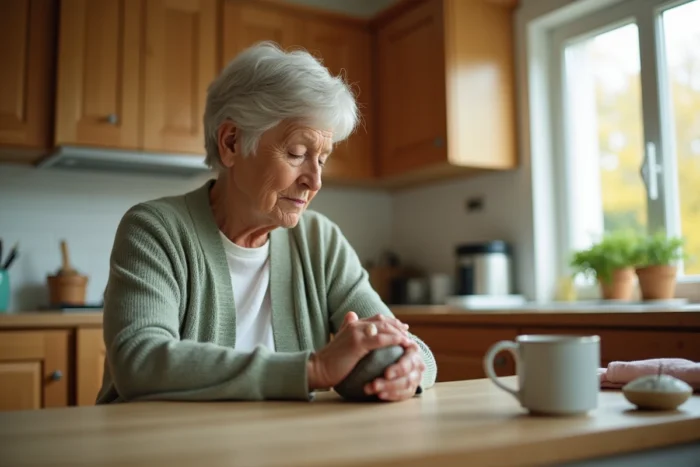
The gain in disability-free life expectancy is stagnating. The DREES study published in January 2026 confirms that a 65-year-old man lives on average 10.5 years without disability, while a woman lives 11.8 years, with only a few months of progress over five years. Improving the quality of life for seniors therefore relies less on extending good health and more on finely adapting daily life, housing, and access to care.
Decree No. 2026-261 on home assistance: what changes for those aged 70-79
As of July 1, 2026, Decree No. 2026-261 raises the age for automatic exemption from employer contributions for hiring home assistance from 70 to 80 years. In practice, seniors aged 70 to 79 lose this exemption unless they receive the APA, the PCH, or have a disability recognition.
We observe that this measure directly increases the cost of maintaining home care for an age group that is often still autonomous but needs occasional help (cleaning, shopping, meal preparation). For these profiles, the out-of-pocket expenses rise significantly, which can discourage the use of professional assistance and accelerate the loss of autonomy.
Three levers can help mitigate the financial impact of this decree:
- Check eligibility for the APA, even at an early stage of loss of autonomy (GIR 4), as it maintains the automatic exemption and entitles one to a personalized aid plan.
- Request the tax credit for personal services, which covers half of the expenses incurred within the tax ceiling, including for non-exempt seniors.
- Turn to home autonomy services (SAD) resulting from the reform of Law No. 2022-1616, which combine assistance and care under a single contact and often offer lower regulated rates than private agreements.
Specialized resources list existing support systems, such as the Santé Radieuse website dedicated to seniors, which details the available aids according to profiles.
Reform of SAD: a single contact to simplify daily life
The merger of the former home assistance services (SAAD) and home nursing services (SSIAD) into home autonomy services represents a structural change. Specified by Decree No. 2023-608, this reform imposes a gradual compliance process with a deadline set for 2025.
The goal is concrete: a senior or a caregiver no longer has to coordinate two distinct structures. The SAD manages both the life assistant and nursing visits, with a single file, a single schedule, and a single point of contact. For elderly individuals who have multiple interventions per day, the reduction in administrative burden is significant.
We recommend checking if the current provider has successfully transitioned to SAD status. Some organizations are slow to comply, creating gray areas in care provision. A service that has not transformed risks losing its authorization, leaving beneficiaries without a short-term solution.
Salary increase for home assistants and impact on care quality
Avenants 75 and 76 of the home assistance branch (BAD), validated by the government, foresee an increase in salaries and mileage allowances for professionals in the sector starting June 1, 2026. This technical point has direct repercussions on the quality of life for seniors.
The home assistance sector suffers from high turnover, fueled by low wages and poorly covered travel expenses. Increasing salaries stabilizes teams and reduces the turnover of caregivers, a documented stress factor for elderly individuals who must constantly adapt to new faces.
The increased mileage allowances and fuel assistance provided by these amendments also reduce refusals of intervention in rural areas. Geographically isolated seniors, who struggle to find an assistant willing to travel, should benefit directly from this.
Prevention of heat-related risks: expanded community register
A decree published in July 2026 aims to quadruple the number of vulnerable individuals registered on community heatwave vigilance registers. This system, often unknown, allows municipalities to contact isolated seniors by phone during heatwaves.
Registration is voluntary or can be done by a third party (neighbor, family member, social worker). It does not impose any obligation on the senior but guarantees a verification call in case of an alert. For individuals living alone without air conditioning, this regular contact reduces the risk of undetected dehydration.
Several concrete actions revolve around this register:
- Register with the CCAS of your municipality before the start of summer, providing a reliable phone number.
- Report an isolated elderly neighbor to the CCAS, with their consent, so they can be included in the system.
- Combine registration with regular visits from an SAD to ensure proper hydration and ventilation of the home.
Adapted physical activity and prevention of sarcopenia in seniors
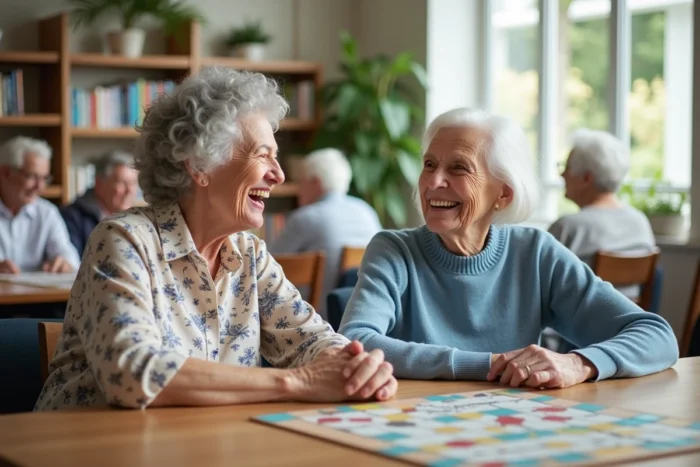
Sarcopenia, the progressive loss of muscle mass related to aging, remains the main factor for falls and loss of autonomy. We recommend not to consider it as a fatality: regular physical activity, even modest, significantly slows this decline.
The ICOPE program, supported by the WHO and relayed in France by the Retirement Insurance, offers structured monitoring of physical, cognitive, and sensory abilities starting at age 60. It allows for the early identification of a decline in muscle strength and directs individuals to suitable workshops.
Daily walking for half an hour, swimming, or aqua gym engages the muscles without traumatizing the joints. Yoga enhances balance and proprioception, two parameters directly correlated with the risk of falling. The goal is not athletic performance but regularity: three weekly sessions are sufficient to maintain muscle function and autonomy in daily tasks.
The cost of inactivity far exceeds that of a subscription to a group class. A senior who falls and fractures their femoral neck enters a long, costly care pathway, with complete recovery never guaranteed. Prevention through movement remains the most effective and least expensive lever to preserve quality of life on a daily basis.