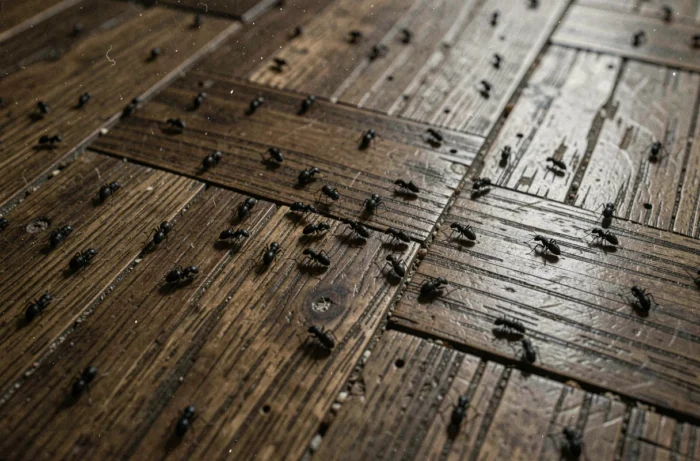
You notice tiny black dots on the edge of your bathtub or near a flower pot. When you get closer, they jump and disappear. Before reaching for an insecticide, the priority is to understand what you are dealing with: the nature of these little jumping black bugs determines the course of action.
Furcula and compressed legs: the jumping mechanism reveals the species
The jump itself is an underutilized clue. Springtails have an organ called furcula, a kind of fork folded under the abdomen that relaxes like a spring. The jump is vertical, erratic, and the creature often lands back in the same spot.
Fleas, on the other hand, jump with their compressed hind legs. Their trajectory is longer and directional: they are looking for a warm-blooded host. If the little black bug jumps towards you or an animal, it is typical flea behavior. If it jumps in place without a specific direction, think springtail.
Observing this detail with the naked eye requires a bit of patience. Place a piece of white paper near the suspected area and tap the nearby surface. The springtails will land on the paper without trying to leave. Fleas will quickly try to get away from it. This simple test helps identify the signs of a jumping black bug infestation before choosing a treatment.
Springtails and humidity: why their presence indicates a water problem
Springtails are not parasites. They feed on mold, microscopic fungi, and decaying organic matter. Their presence signals an active source of moisture, not a colonization in the classic sense.
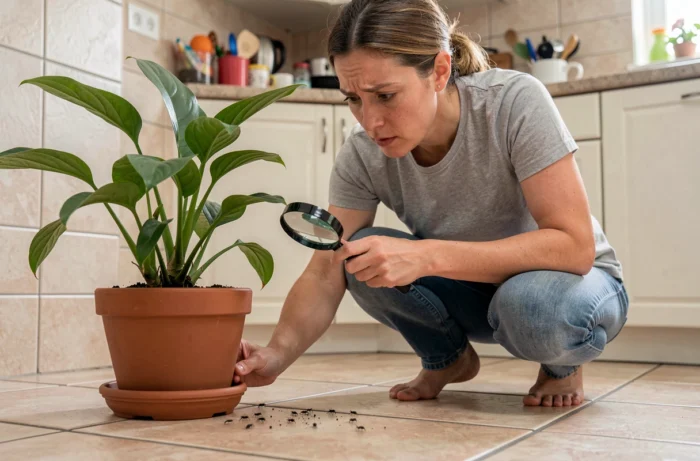
You typically find them in the bathroom (near the joints, around the bathtub), under the kitchen sink, in overwatered plant soil, or along a leaky pipe. In every case, the common denominator is water.
Field clues specific to springtails
- They appear in clusters in a specific area, always damp: tile joints, shower tray edges, flower pot saucers
- Their number visibly decreases when you ventilate the room or let the soil dry for a few days
- No bites on the skin, no bumps, no itching, even after several weeks of cohabitation
- They do not move towards textiles, the bed, or clothing: they remain confined to the moisture source
Drying the area does more than any spray. Recent specialized guides converge on this point: fixing the leak, improving ventilation, or reducing plant watering is usually enough to make springtails disappear without any chemical products.
Black fleas in the home: the real markers of a parasitic infestation
Do you have a cat, dog, or an animal that goes outside regularly? The flea trail becomes serious. The markers are very different from those of springtails.
The white cloth test on the animal
Run a fine comb through your pet’s fur over a damp white cloth. If small black grains fall and leave a reddish-brown mark upon contact with water, these are flea droppings made of digested blood. This is the most reliable sign of an active infestation.
Bites, bumps, and location on the body
Fleas primarily bite humans on the ankles and calves, sometimes at the waist. The bumps often form lines or small groups of two to three closely spaced red dots. If you notice bites in these areas and your pet is scratching frequently, the flea infestation is likely and not just possible.
Springtails, in comparison, never cause bites. This distinction is the quickest criterion to guide your diagnosis.
Thrips on indoor plants: the third often overlooked clue
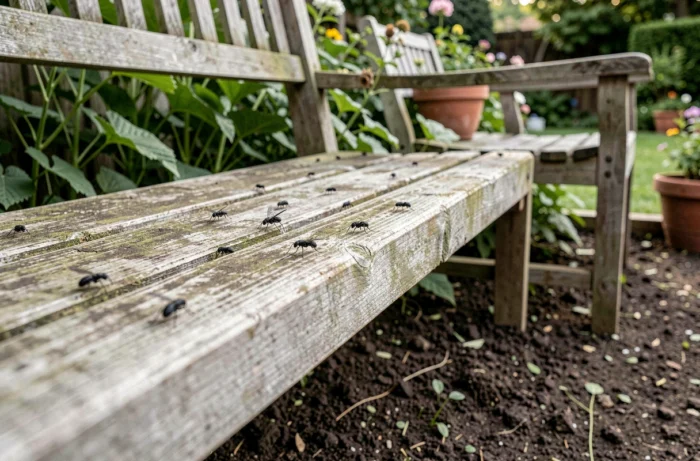
Have you noticed tiny black insects jumping on the leaves of your indoor plants? Thrips are a common source of confusion. These elongated insects, barely visible, measure less than two millimeters and move by small jumps on the foliage.
The damage they cause is characteristic: silver or discolored streaks on the leaf surface, sometimes accompanied by small black dots (their droppings). Flowers may also deform or brown prematurely.
Unlike springtails, thrips have no connection to the room’s humidity. They often arrive with a new plant purchased at a garden center or through an open window in warm seasons. Inspecting the undersides of leaves and the folds of flowers allows you to spot them before they spread to other pots.
Acting according to the identified species: three distinct responses
Treating before identifying is the first mistake. Once the species is recognized, the response is simple:
- Springtails: fix the leak, ventilate, reduce watering, let the soil dry. No chemical product is necessary in most situations
- Fleas: treat the animal with an appropriate antiparasitic, wash textiles at high temperatures, thoroughly vacuum sleeping areas and baseboards. If the infestation persists after two treatment cycles, a pest control professional is warranted
- Thrips: isolate the affected plant, clean the leaves with soapy water, remove heavily affected parts. A biological treatment (diluted black soap) is sufficient for moderate cases
The disappearance of tiny jumping black bugs always involves eliminating what attracts them. For springtails, it’s standing water. For fleas, it’s the untreated animal host. For thrips, it’s the colonized plant. As long as the cause remains in place, spraying only pushes the problem back for a few days.