
You order a top in XL, and it gapes at the shoulders. You try the same style in XXL from another brand, and it feels tight across the chest. The problem isn’t your body—it’s the label: XL and XXL don’t correspond to any fixed measurements.
Every retailer sets its own size chart, and the often-cited ISO 8559-2 standard explains where to place the tape measure, not which measurements correspond to each letter. Understanding your body shape and measurements is therefore the only reliable way to choose between these two sizes.
Body measurements and garment measurements: two figures not to confuse
When you measure your chest with a tape measure, you get a body measurement. The figure in a brand’s size guide may refer either to that same body measurement or to the garment’s measurement laid flat, multiplied by two. The difference between the two is called ease, and it varies depending on the fit.
An oversized XL T-shirt allows several extra centimeters of ease compared with a fitted shirt in the same size. So before comparing two size guides, check whether the figures refer to body measurements or finished garment dimensions. This distinction, which is rarely highlighted, can prevent you from ordering a size up just to be on the safe side.
To find out what size XL means for women in a particular size chart, first check which type of measurement it uses, then compare it with your own measurements.
Taking your measurements: a method that helps avoid mistakes
Use a flexible tape measure, wear your usual underwear, and stand up straight without sucking in your stomach. Measure three areas and record each figure to the nearest centimeter.
- Bust: Wrap the tape horizontally around the fullest part of your chest. For women, measure over your bra; at the back, pass the tape under your arms. Keep it flat without pulling it tight.
- Waist: Measure around your natural waist, a few centimeters above your navel. This is the narrowest part of your torso.
- Hips (seat): Wrap the tape around the fullest part of your hips, about twenty centimeters below your waist. Keep the tape parallel to the floor.
Ideally, ask someone to help. Measuring your own bust at the back often leads to a reading that’s off by a few centimeters—enough to put you in a different size.

Women’s XL or XXL: where the choice depends on the type of garment
At most French retailers (Kiabi, H&M, Decathlon), women’s XL generally covers sizes 44 to 48, while XXL starts around size 46 and goes up from there. The ranges overlap, and that overlap is exactly what causes confusion.
In practice, the right size depends on the garment, not just the letter. For trousers, hip measurement is the priority. For a coat, bust measurement determines the choice because you’ll wear layers underneath. For a straight-cut dress, all three measurements matter.
When body shape matters more than bust measurement
Two people with the same bust measurement may wear different sizes if their proportions differ. Someone with a V-shaped figure (broad shoulders, narrow hips) may need an XL top and sometimes an L bottom. Someone with an A-shaped figure (hips wider than shoulders) may need the opposite.
The letter on the label describes only an average body shape. Comparing all three of your measurements with the brand’s size guide for each garment is far more reliable than going by the size you usually wear.
Men’s XL or XXL: differences between brands and common pitfalls
For men, Celio and H&M size charts place XL in the upper bust-measurement range (over 100 centimeters), with XXL covering larger measurements. The difference between the two often comes down to just a few centimeters in the chest and waist.
The most common pitfall concerns tops. An XL polo from a slim-fit brand may feel tighter than an L from a brand with a regular fit. If you’re choosing between XL and XXL, measure the width of a garment that fits well and compare it with the size guide—it’s the most straightforward approach.
Torso length and sleeve length
XL and XXL increase the garment’s width, but also its length. For tall men, sizing up can sometimes solve a torso-length issue while leaving excess fabric around the shoulders. Some brands offer “tall” fits that add length without extra width, but they’re still uncommon in France.
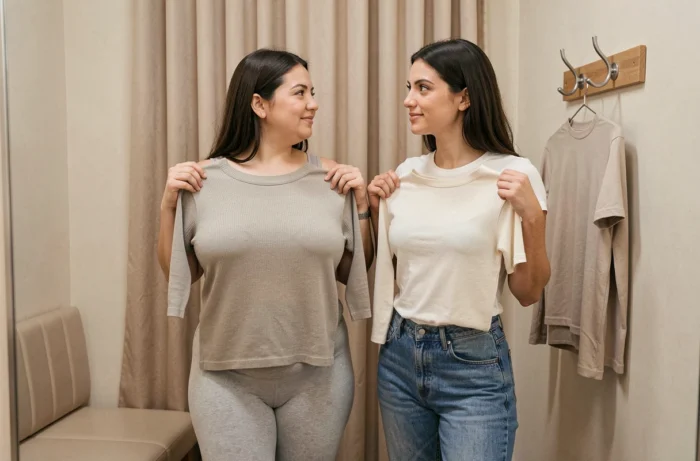
Comparing size charts across brands without getting confused
There’s no mandatory standard for size charts. ISO 8559 provides a standardized method for taking measurements, but each brand then sets its own size conversions. Bust measurements for the same letter can regularly differ by two to four centimeters between retailers.
- Take your three measurements once, write them down, and keep them handy on your phone.
- Check the size guide for the brand you’re shopping with before every online purchase—not afterward.
- If you fall between two sizes, choose the larger one for structured garments (jackets, coats) and the more fitted one for stretchy fabrics (leggings, fitted T-shirts).
Assuming “I wear XL in everything” can mean extra returns and shipping costs. Taking your measurements in five minutes saves more time than getting three failed try-ons out of the way.
The only variable that’s hard to predict is how each brand sizes its clothes: even when two retailers use the same letters, differences in ease, fit, and target audience can shift the result by a full size. Keep your measurements up to date and check the right size guide at the right time—that’s all it takes to stop the letter on the label from being a gamble.