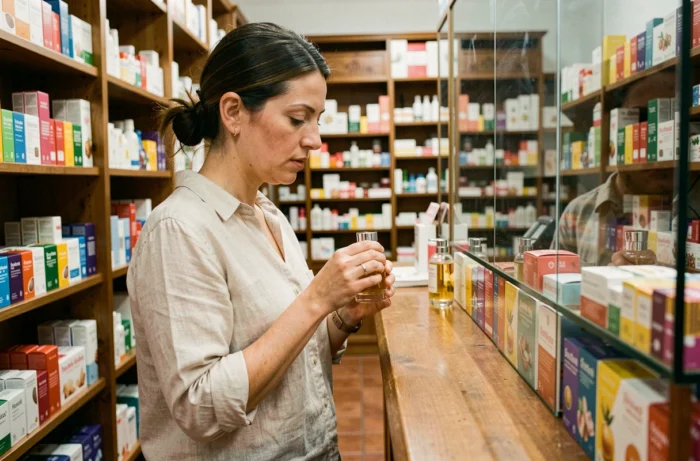
The pricing structure of perfumes in Spain relies on a short distribution circuit and compressed distributor margins. Understanding these mechanisms allows for optimizing each purchase, whether in a physical store or through Spanish e-commerce platforms.
Trigger thresholds for Spanish promotions: the mechanism to know
Spanish retailers condition a large part of their benefits on cart thresholds. For example, Douglas triggers gifts and additional discounts starting from a minimum purchase amount. Primor structures its active promotions around similar tiers, with cumulative offers on certain ranges.
This system changes the purchasing strategy. Grouping several items in a single order or checkout significantly lowers the unit price compared to French rates. We recommend targeting a cart threshold before finalizing the purchase rather than comparing unit prices.
Discounts are not limited to seasonal sales. Primor and Perfumerias.com display permanent promotions in their catalog, with frequent rotations. First purchase coupons and newsletter sign-up discounts provide an additional lever, often overlooked by occasional buyers.

Online perfume in Spain: Comparing Primor, Douglas, and Perfume’s Club
The Spanish perfume market is no longer limited to border perfumeries. By 2026, Spanish e-commerce platforms will offer prices aligned with, or even lower than, those practiced in stores. Primor, Douglas Spain, and Perfume’s Club dominate this segment with distinct approaches.
Primor promotes refillable formats and 30 ml or 50 ml bottles as a cost-saving lever. The reasoning is simple: stay under a spending threshold while accessing branded fragrances. Douglas focuses more on conditional offers (gift with purchase, free shipping) and the loyalty program. Perfume’s Club positions itself on the guarantee of the best online price with a very wide catalog.
Before physically going out, it is relevant to buy perfume in Spain with Atypik Beauté to spot the real price differences between retailers and identify the most profitable formats based on consumption.
- Primor: permanent promotions, outlet dedicated to men’s and women’s perfumes, aggressive pricing policy on large format eaux de toilette
- Douglas Spain: gifts triggered by cart thresholds, continuously updated sales section, often free shipping beyond a minimum
- Perfume’s Club: best price guarantee, loyalty program with convertible points, wide selection of niche and designer brands
We observe that the price gap between these three retailers rarely exceeds a few euros per bottle. The real differentiator lies in the additional conditions: shipping fees, gifts, and especially welcome coupons.
Refillable formats and small bottles: the calculation that no one makes
Contents oriented towards “small budget” consistently recommend small formats. The reality is more nuanced. A 30 ml bottle is proportionally more expensive per milliliter than a 100 ml. The refillable format reverses this logic.
Primor highlights refillable bottles as an economical alternative for recurring purchases. The initial investment is comparable to a classic bottle, but refills significantly lower the cost per milliliter over time.
For a one-time purchase (travel, testing a new fragrance), the 30 ml or 50 ml remains relevant. For a signature scent worn daily, the refillable option becomes essential. This choice depends on the relationship between usage frequency and the annual budget allocated to fragrances.
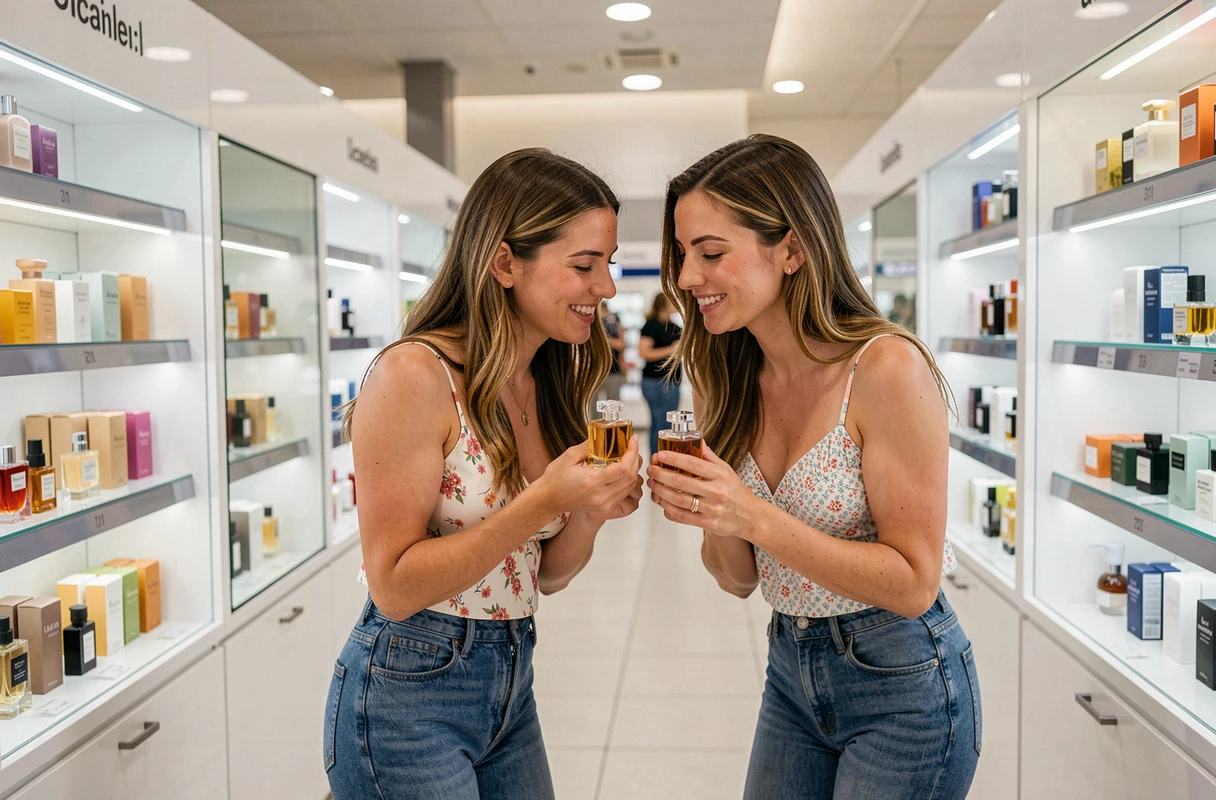
EDT, EDP, extrait: concentration changes everything in the calculation
Comparing prices without considering concentration is a common mistake. A discounted eau de toilette can end up being more expensive than an eau de parfum if the longevity requires reapplication several times a day. The price per milliliter is not enough; one must reason in cost per application.
Spanish perfumeries often offer all three concentrations of the same reference. We recommend checking the availability of the EDP before reflexively opting for the EDT due to price.
Pitfalls to avoid in the Spanish perfume market
The Spanish market includes players specialized in clones and inspired perfumes. Sites like Caravan Fragancias or certain online shops offer low-cost alternatives that have nothing to do with the originals. Confusion is perpetuated by marketing that plays on olfactory families.
- Check that the site or store distributes brands under official license, not “inspired by”
- Verify the presence of the batch number and EAN barcode on the bottle
- Prefer referenced retailers (Primor, Douglas, Perfume’s Club, Perfumerias.com) that guarantee authenticity
- Beware of abnormally low prices on usually stable references, a frequent sign of counterfeiting or diverted stock
Promotions conditioned on a first purchase or registration are legitimate among major distributors. However, a discount coupon exceeding half the catalog price should raise alarms.
Taxation and VAT: what changes concretely
The Spanish VAT on cosmetic products and perfumes is slightly lower than French VAT. This fiscal gap, combined with lower distributor margins, explains part of the price differential. For French residents purchasing online from a Spanish site delivering to France, French VAT applies. The tax advantage only fully applies for a purchase made on-site or shipped from Spain to a Spanish address.
The Canary Islands benefit from a distinct tax regime with even lower taxation, making it a particularly interesting destination for high-end perfume purchases.
The choice between physical purchase and online order ultimately depends on the expected volume. For one or two bottles, e-commerce promotions and welcome coupons are sufficient to obtain a competitive price. For a bulk purchase or annual renewal, visiting a border retailer or going to the Canary Islands remains the most effective lever.