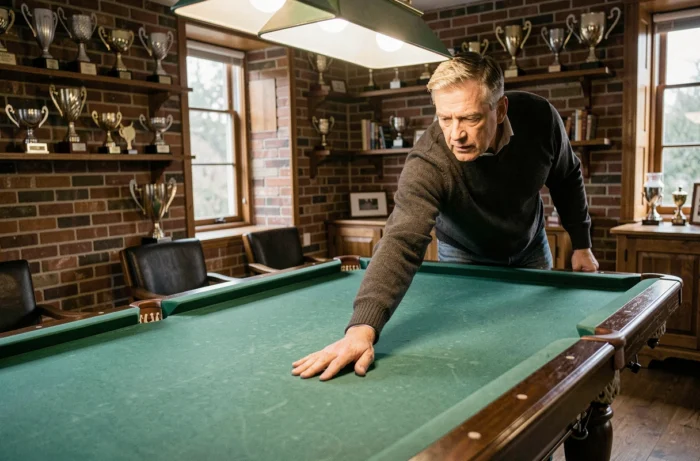
A billiard table installed in a garage, an outbuilding, or a poorly insulated room poses a problem that most game guides overlook: the temperature and humidity of the space affect the behavior of the cloth, the balls, and the wood of the table. Heating a billiard table is not just about turning up the thermostat. The diagnosis of the room, the type of heat distributed, and the control of humidity determine both the quality of play and the longevity of the equipment.
Thermal diagnosis of the room before any heating purchase
The first mistake is to choose a radiator based on its power without analyzing the room. Surface area, ceiling height, number of openings, insulation quality, and frequency of use are the variables to consider for properly sizing the heating.
A single-story garage with a metal door and uninsulated walls loses heat within minutes once the heating stops. Installing a powerful convector in this context is akin to heating the outside. Conversely, a dedicated room with double glazing and an insulated ceiling retains heat for a long time, even with a modest device.
Before spending anything on heating, one must address the points of heat loss. Insulating the walls, ceiling, and door is the most effective improvement to stabilize the temperature around the table. It also limits sudden thermal variations that can warp the wood of the frame over time.
The methods for heating a billiard table therefore depend first on this initial assessment, rather than on a random choice of device from a catalog.
Convection, radiation, or forced air heating: what changes for the game
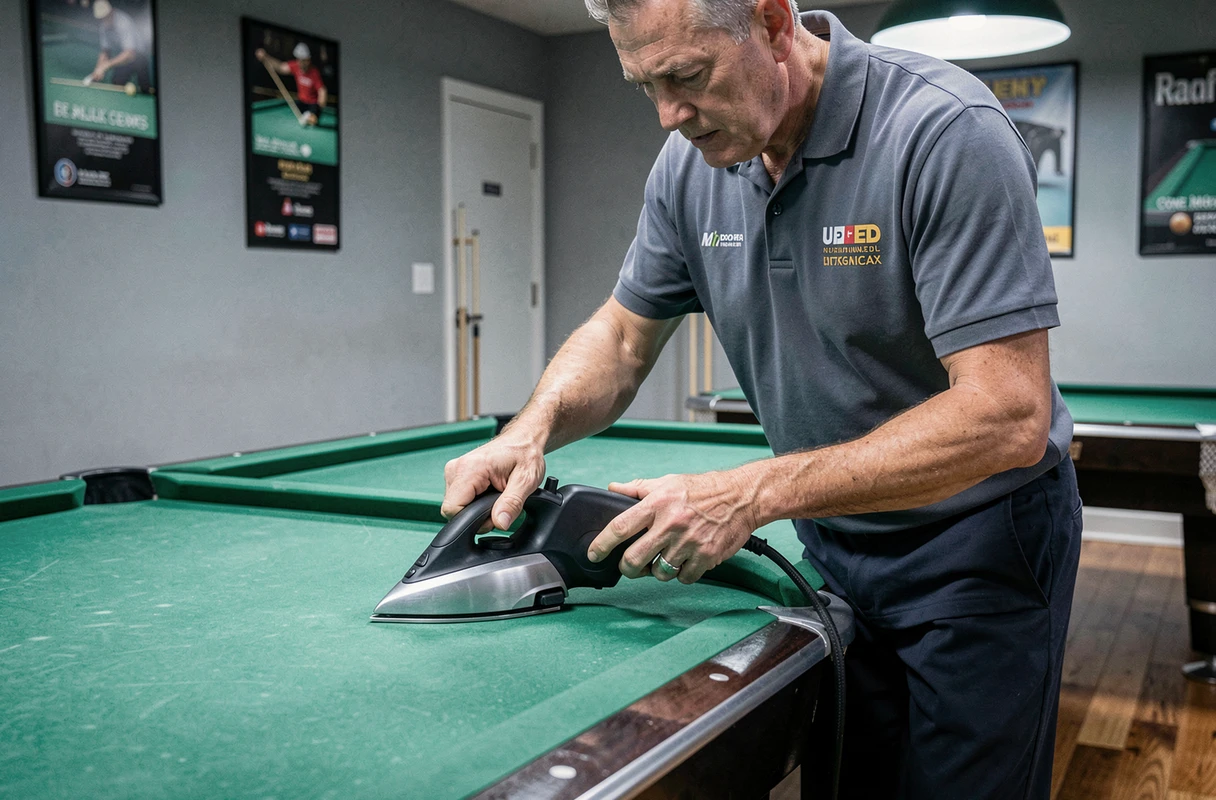
Consumer guides talk about “heating the room” without distinguishing the modes of distribution. For a billiard space, the difference between convection, radiation, and forced air has direct consequences on comfort and equipment.
Classic convection and its limits
An electric convector heats the ambient air through circulation. The warm air rises to the ceiling, while the cold air remains on the floor. In a room with standard ceiling height, the temperature difference between the table level and the ceiling can be significant. The player feels warm on the face but cold in the hands, which affects the precision of the shot.
Convection dries the air quickly, which is a problem for the cloth and rubber cushions. Air that is too dry stiffens the rubber of the cushions and alters the response of the balls upon contact.
Infrared radiation: heating the playing area
A radiant panel or infrared emitter heats surfaces and bodies without warming the air throughout the room. This mode of distribution has a concrete advantage for a billiard space: the heat is concentrated on the area actually occupied around the table.
Radiation does not create air currents, which prevents micro-movements of dust on the cloth. However, it does not warm the walls or surrounding furniture, which limits its effectiveness in a very cold room where the sensation of cold walls persists.
Forced air: speed versus stability
A fan heater or blower raises the temperature quickly but generates a continuous airflow. This airflow can move the fine chalk deposited on the cloth and disrupt the reading of trajectories. For a short session in a freezing room, this is an acceptable compromise. For regular use, feedback varies on this point: some players adapt to it, while others notice premature wear of the cloth.
Relative humidity and billiard stability
Temperature alone is not enough. Humidity is the most often neglected operational factor in a billiard room. An unheated garage in winter can reach very high levels of relative humidity, while an electric heater pushed to the max can drop this humidity well below comfort thresholds for wood and fabric.
The wood of the table (frame, legs, slate structure) reacts to humidity variations by expanding and contracting. Repeated cycles of hot-dry and then cold-wet eventually warp the frame or delaminate the veneers. The cloth absorbs ambient moisture: a damp cloth slows down the balls, while a cloth that is too dry speeds them up and alters the effects.
Aiming for a stable range of relative humidity improves the consistency of play more effectively than simply raising the temperature. A hygrometer placed at table height allows monitoring of this parameter. If the room is naturally humid, a dehumidifier coupled with heating yields better results than a radiator alone.
Lighting and temperature: two linked optimization levers
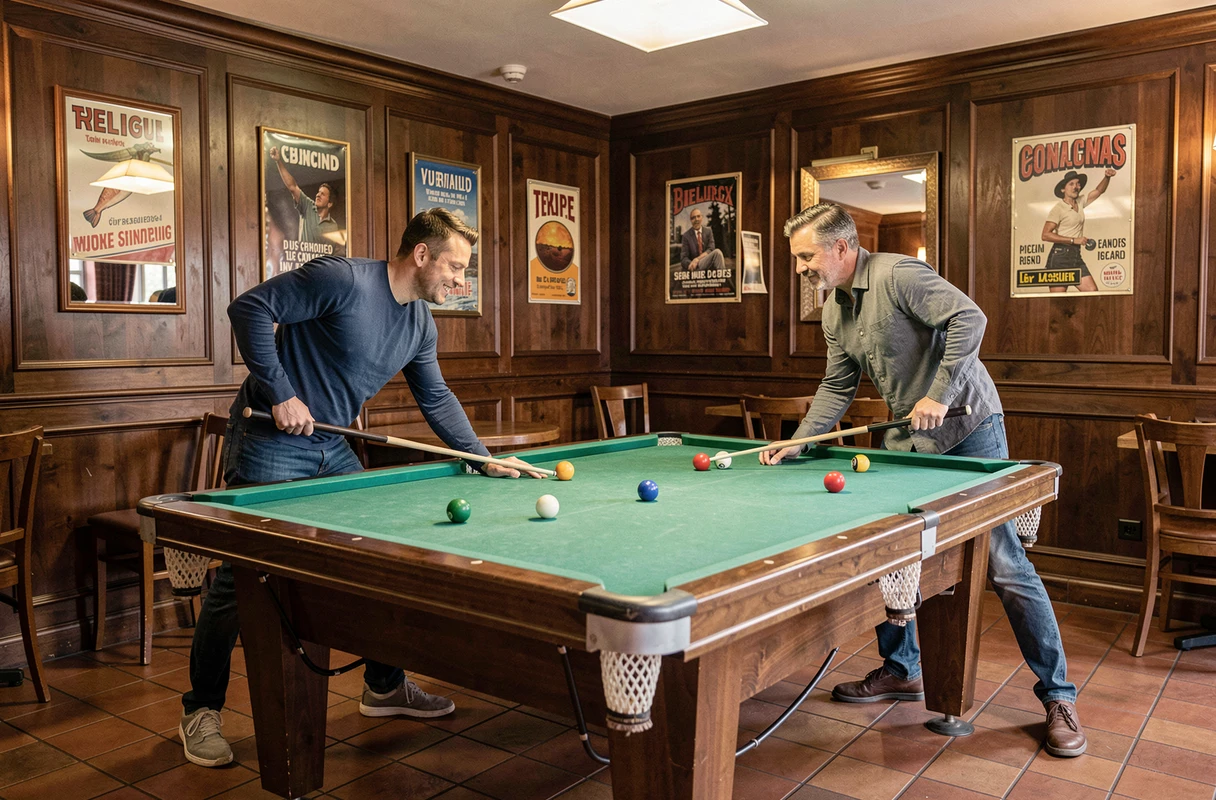
Lighting is part of optimizing the game just as much as heating, and the two interact. An incandescent billiard lamp suspended above the table emits a significant amount of heat onto the cloth. This localized heat dries out the central area of the cloth faster than the cushions, creating a difference in slide between the center and the sides.
LED lighting produces almost no heat and offers a more uniform light distribution. This technical choice, often presented as aesthetic, has a measurable impact on the thermal uniformity of the cloth.
To optimize the playing space, several elements should be checked together:
- The height of the light suspension, which determines both the lighting and the thermal contribution to the cloth
- The type of light source (LED or incandescent) and its effect on the surface temperature of the cloth
- The position of the heating relative to the table, avoiding any direct airflow over the playing area
Temperature acclimatization routine before a session
Turning on the heating and playing immediately does not provide the same conditions as a gradual temperature acclimatization. The wood and fabric need time to reach thermal equilibrium. Playing on a still-cold table in a room that is starting to heat means playing on equipment that is expanding, with behavior changing throughout the game.
The most coherent procedure for a quality session relies on a few simple steps:
- Turn on the heating well in advance so that the room and table reach a uniform temperature
- Check the humidity and adjust if necessary with a dehumidifier or humidifier
- Brush the cloth in the direction of the nap once the temperature is stabilized, to remove dust and uniform the surface
- Avoid opening windows during the session to prevent thermal shock
A space that is stable in temperature and humidity transforms the game more than a change of cue or technique. Players who invest in their equipment without considering the thermal environment miss out on an accessible and sustainable improvement lever.